
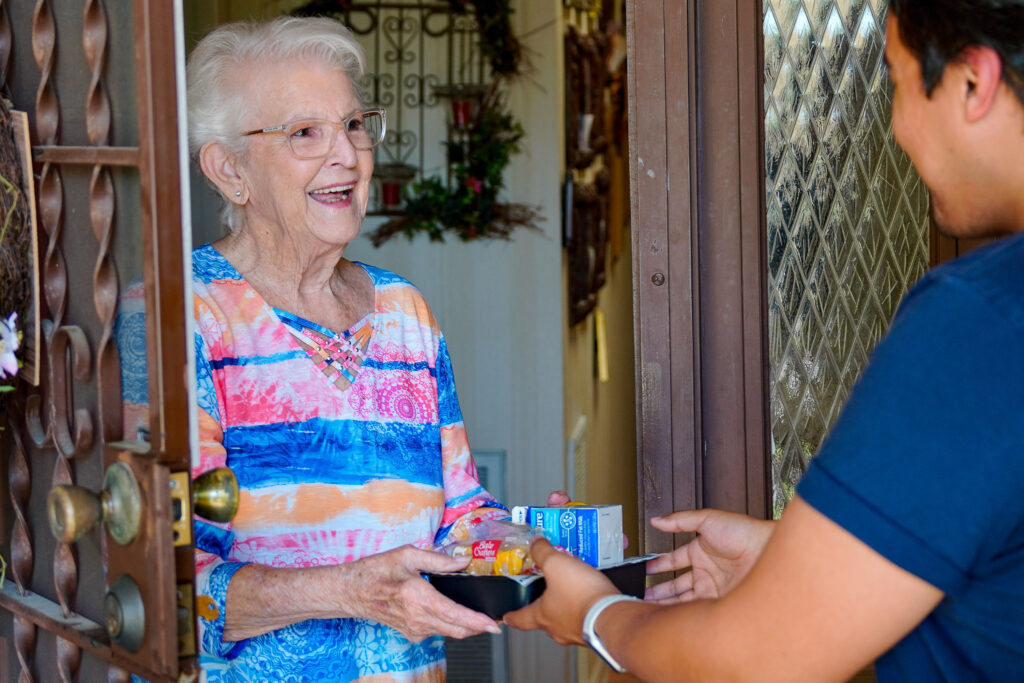
Most of us don’t think twice about who would notice if something went wrong on an ordinary Tuesday. A neighbor might wave from the driveway, a coworker might text, a sister might call to ask what’s for dinner. For many homebound adults in Weld County, none of that happens, and the knock from a volunteer is the one visit they can count on. That’s why every delivery from our Greeley kitchen includes a Meals on Wheels check-in: a few unhurried minutes at the door where a familiar face takes in how someone is really doing.
The visit someone is waiting for
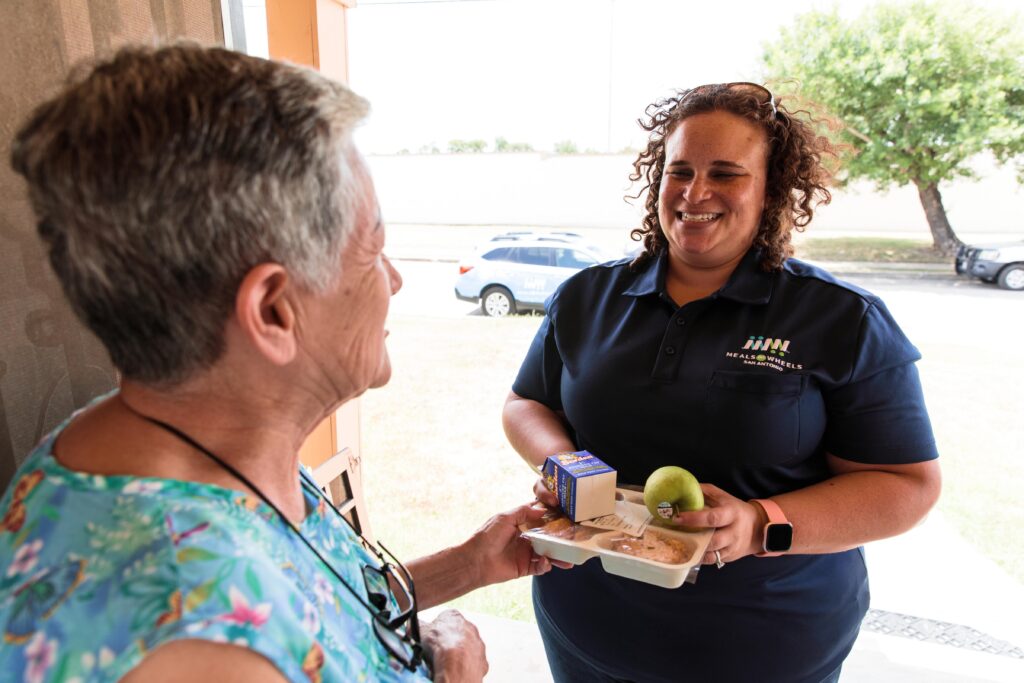
Meals on Wheels America points out that for a homebound older adult, the person delivering the meal might be the only person they see all week. Here in Greeley and Weld County, our volunteers are on the road every weekday, so that visit becomes part of the shape of someone’s week. It’s something to look forward to, and for some clients it’s a reason to get up, get dressed, and listen for the car.
That steady presence matters to families, too. An adult daughter working in Denver or a son pulling long shifts can’t always stop by on a Wednesday afternoon. Knowing that a trained, friendly person sees Mom or Dad in person each weekday brings a kind of peace that a phone call can’t quite match, because a voice on the line can say “I’m fine” a lot more easily than a face at the door can.
What volunteers notice at the door
A check-in isn’t a medical exam, and our volunteers aren’t nurses. What they offer is consistency. When you see the same person week after week, small changes start to stand out.
A volunteer might notice:
- A client who usually loves to chat but barely says a word today
- Yesterday’s meal still sitting on the counter, unopened
- A new bruise, a limp, or real trouble getting to the door, any of which can point to a recent fall
- Mail and newspapers stacking up on the porch
- A house that feels far too cold in January or far too warm in July
- Confusion about what day it is, or a mention of running out of medication
- No answer at the door at all
On its own, any of these could be nothing. Paired with what a volunteer already knows about that person, it’s often the first sign something has changed, and catching it early can keep a manageable problem from becoming a hospital stay.
The national numbers show why those eyes on the porch matter. According to the federal survey of home-delivered meal clients cited by Meals on Wheels America, about a quarter reported a fall in the past month, and roughly two out of three take five or more medications a day. Isolation carries its own risk as well: research published in the journal Heart linked loneliness and social isolation to a 32% higher risk of stroke.
What happens after a volunteer notices something
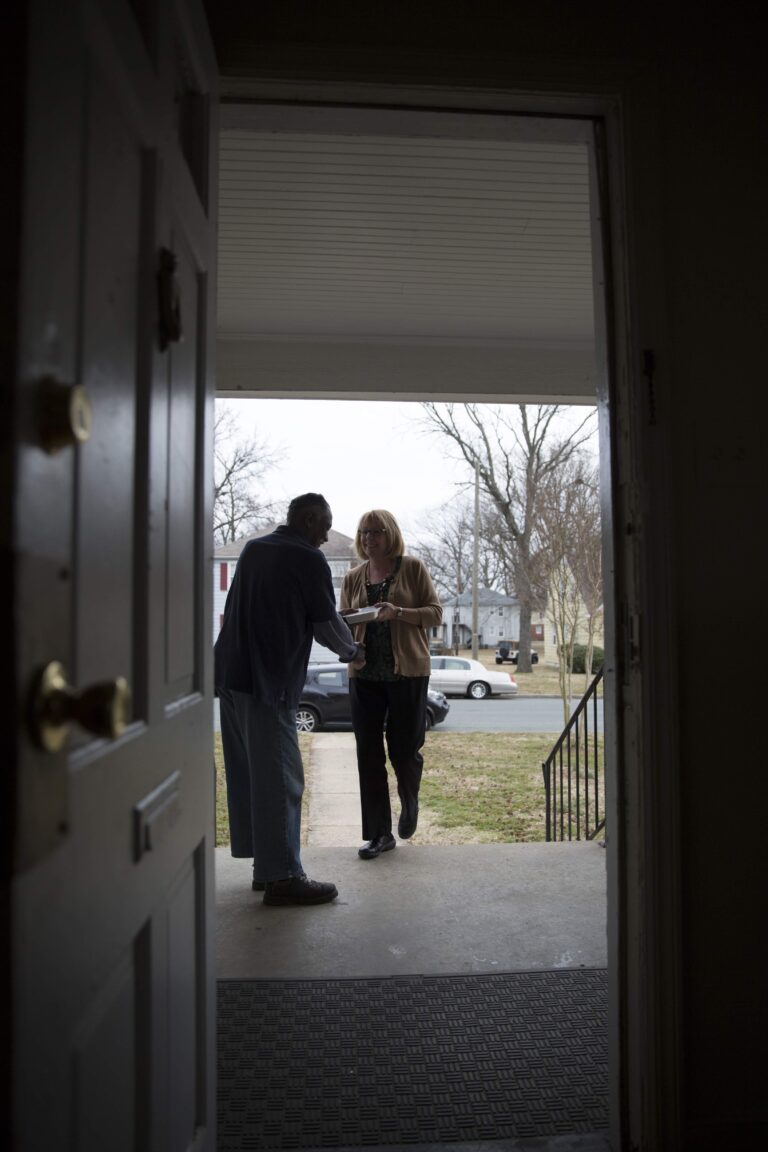
Spotting a problem only helps if someone follows through. We train our delivery drivers to watch for changes in a client’s well-being and step in when a safety concern or health change comes up. Our volunteers report any changes to our office before the end of their delivery route. Our staff can then contact the client’s emergency contact or family member to share any concerns. If a situation looks urgent, our team can call for emergency help right away.
Clients feel the difference. Nationally, 78% of home-delivered meal clients say the regular visits make them feel safer at home, and 91% say the meals help them keep living independently. For an aging adult who wants to stay in the house where they raised their kids, planted the garden, and know every creak in the floor, that independence is the whole point.
Why this is different from a delivery service
Plenty of companies can leave a bag on a porch, and an app will happily tell you your order arrived. What it can’t tell you is if the person who opened the door looked pale, seemed a little lost, or never came to the door at all. That part of our work never shows up on a receipt, and it’s a big reason Meals on Wheels has been woven into this community for over 55 years. Our mission has always reached past the hot meal, toward keeping neighbors healthy, safe, and at home for as long as they want to be there.
You could be the one who notices
Every route needs a neighbor. Our volunteers drive routes in Greeley, Evans, Windsor, Platteville, Fort Lupton, Mead, and the surrounding communities. A typical volunteer shift takes about an hour and a half. You don’t need a background in health care, only a willingness to show up, say hello, and pay attention. Sign up to deliver meals, and you’ll become part of someone’s week in a way few people get to be.
If driving a route doesn’t fit your schedule, you can still keep those weekday knocks coming. The Lunch Bunch is our community of monthly donors, and smaller gifts that repeat every month add up to steady support all year long. Show Up Every Month. So We Can Show Up Every Day. Join the Lunch Bunch.
And if you’re reading this because you’re worried about someone you love, you can learn how to get meals or call our office at 970-353-9738.
Frequently Asked Questions
What is a Meals on Wheels check-in?
It’s a short, friendly check-in that comes with each meal delivery. The volunteer greets the client, chats for a minute, and pays attention to how they’re doing compared with usual. It isn’t a medical visit, but it gives a familiar, trained person a regular look at someone who might otherwise go days without seeing anyone.
How often do volunteers visit clients in Greeley and Weld County?
Our volunteers deliver meals every weekday.
What happens if a client doesn’t answer the door?
This is one of the most important parts of the wellness check, because an unanswered door can be the first sign that someone needs help. Volunteers who find an unanswered door call our office staff, who then find out whether the client is out for an appointment or unable to come to the door.
What kinds of changes do volunteers look for?
Volunteers watch for anything out of character: a change in mood or alertness, signs of a fall, uneaten meals, mail piling up, an uncomfortable indoor temperature, or comments about missing medication. Any one of these may be harmless, but volunteers pass along what they see so our staff can follow up.
Can I sign up a parent or relative for meals?
Yes. Start by visiting our How to Get Meals page or by calling 970-353-9738, and our team will walk you through the next steps.
How do I become a Meals on Wheels volunteer?
Visit our volunteer page to sign up. We have routes across Greeley, Evans, Windsor, Platteville, Fort Lupton, Mead, and nearby communities, so there’s a good chance one runs close to you.